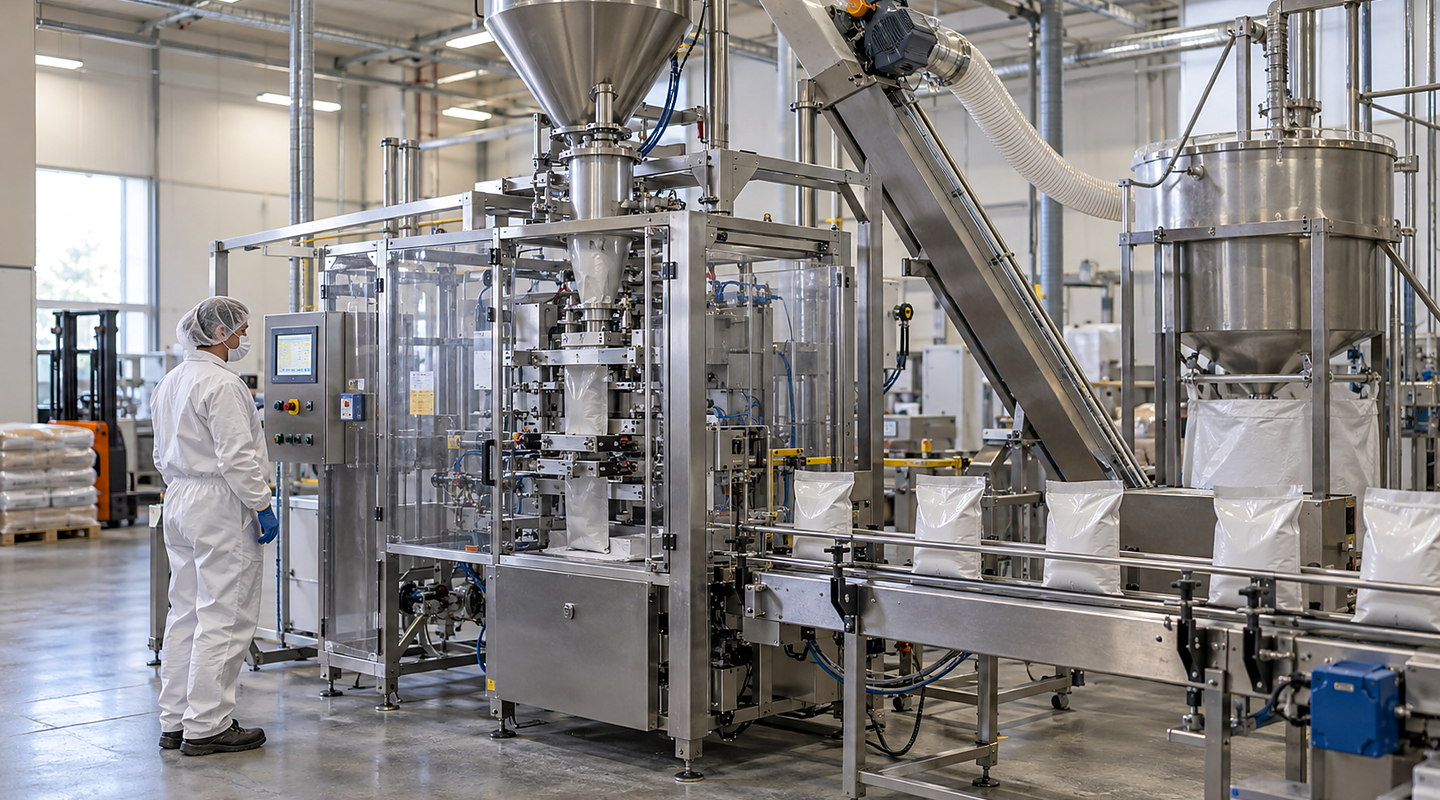
Rice Packing Machines FAQs
Answers about rice packing machines, premade bags and roll film, quote inputs, weight variation, seal checks and accepted output during a trial.
The bag format, target weights and operating pattern set the starting point. Use these answers to prepare samples, compare manual and automatic tasks, and agree what counts as an accepted finished bag.
Your final rice packing machines scope must also account for cleaning, access and changeover method, finished-pack checks and reject handling, current regulations and the conditions at your site.
Get practical answers for your application — Rice Packing Machines
Plan rice packing machines around your product, pack range, target output, cleaning needs and finished-pack checks. Discuss a practical line concept with Lancing using representative samples. The answers below explain suitable applications for Rice Packing Machines, what information helps and what still needs an application-specific check.
Discuss your application
Practical answers about rice packing machines
Which rice packing machine suits our bag sizes and required output?
First identify how the bag arrives. A premade bag needs opening, support and closing. A roll-film route also needs forming, tracking and reel changes. Test your smallest and largest packs, then count accepted finished bags through replenishment using the intended staffing.
How should a project for rice packing machines begin?
Start the brief with the rice varieties and normal fines, the target weights, and actual bags or the proposed film specification. Add the order pattern and the main difficulty, for example spillage at the mouth or grains caught in the seal.
Can you quote rice packing machines from a short description?
A short brief can start a budget discussion. For comparable quotations, list the feed, weighing, bagging and closing stages included in each offer, who supplies the line connections, and what trial and site work the price covers.
What information should we send about rice packing machines?
Send the bag dimensions, target weights and rice conditions. Add representative samples or authorised drawings when available, the required accepted output, planned changeovers and known space or service limits.
How will performance be checked?
Record individual doses, transfer spillage, grain condition and seal results. Include a refill, restart and a representative changeover. Compare accepted bags with elapsed run time and record rejects and operator interventions separately.
What are the main limitations?
Food-contact, hygiene and allergen controls must be validated for the actual product and site. The selected method must be trialled with representative product and packaging. Supplier tolerances and product-condition changes can alter handling or fill behaviour.
What alternatives should be considered for routine production using rice weighing and bag sealing?
Write down who feeds or presents each bag, replenishes rice or film, and removes the closed bag. Compare an operator-assisted arrangement with automatic handling on the same orders. Short runs can make setup and startup losses as important as the steady filling cycle.
Can the proposed solution guarantee regulatory compliance?
No solution can guarantee compliance on its own. Applicable law, current standards, risk assessment, validation and conformity responsibilities must be addressed for your complete application.
Who will handle my enquiry?
Lancing will receive enquiries from ricepackingmachines.co.uk. Call 01494 623015 or email sales@lancinguk.com to speak with the team directly.