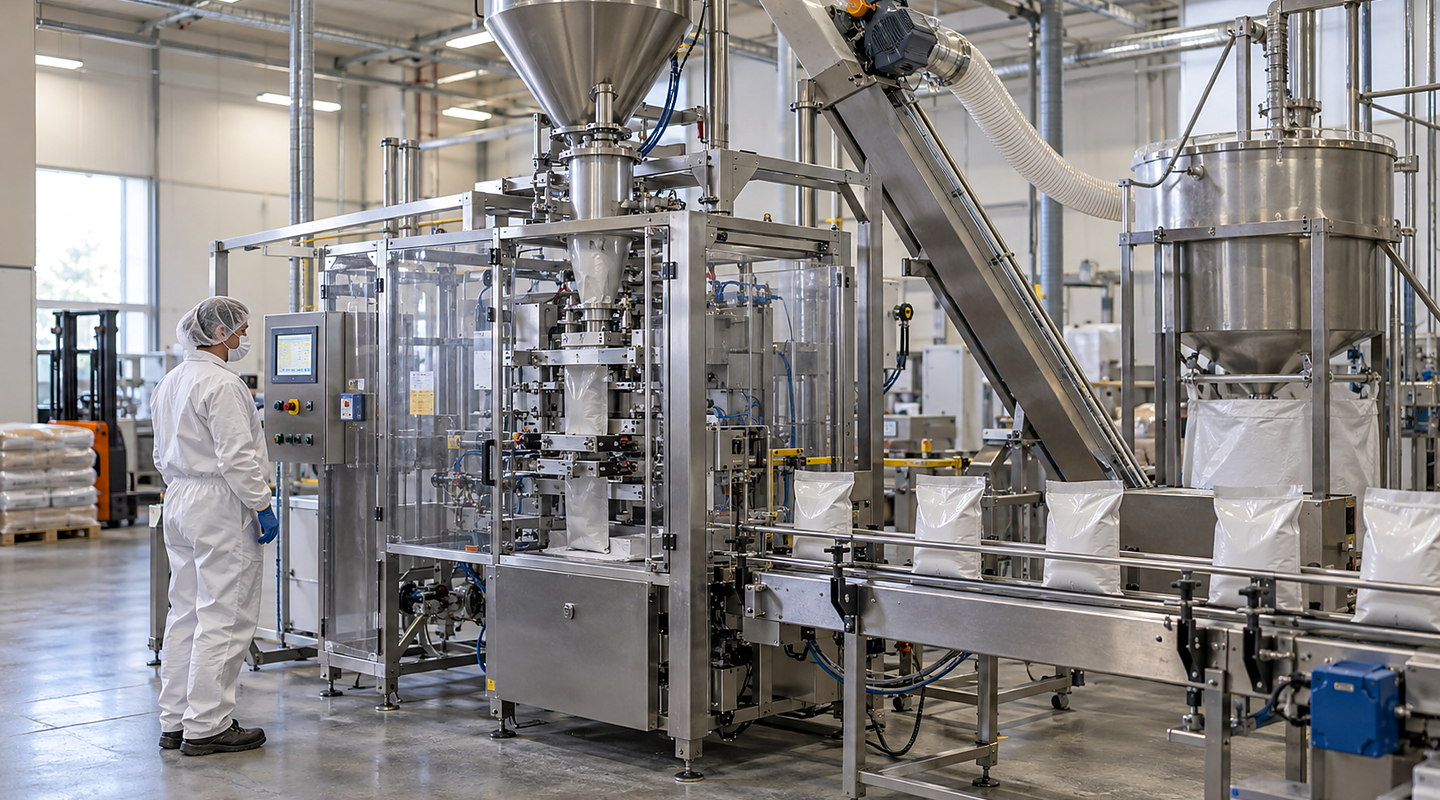
Rice Packing Machines: How the Process Works
Follow rice from product supply and weighing through bag filling, closing and finished-pack checks, including replenishment, restart and changeover trials.
A rice packing sequence includes product supply, weighing, discharge into a supported bag, closing and finished-bag checks. Trial each stage with the actual rice and packaging, then run the connected sequence through replenishment, short stops and changeover while recording accepted finished bags.
Use the premade-bag and roll-film comparison and finished-bag trial plan. Keep dose variation, transfer spillage, grain damage and seal contamination as separate observations so corrective work addresses the right stage.
Understand the complete route from input to accepted output — Rice Packing Machines
Plan rice packing machines around your product, pack range, target output, cleaning needs and finished-pack checks. Discuss a practical line concept with Lancing using representative samples. Follow the material or part through each operating step and include recovery, cleaning and change in the real cycle.
Discuss your application

Four stages from loose rice to a closed bag
Follow one bag through the line. A low finished weight can begin at the feeder or arise when a correct dose misses the bag. Observing each handover helps locate the loss.
- 01
Feed rice to the weighing stage
Observe how the intended rice variety and its fines move through the feed route as the hopper empties and is refilled. Compare grain condition before and after transfer.
- 02
Weigh each dose
Record individual doses at the target weight. Look for retained rice or a late tail of grains after discharge, so dosing variation can be separated from transfer losses.
- 03
Fill and support the bag
For a premade bag, check the opening and support during filling. For a bag formed from film, also check the formed dimensions and print registration where relevant. Watch for rice missing the opening.
- 04
Close and inspect the finished bag
Check the mouth for trapped grains before sealing. After normal removal, inspect seal integrity and bag stability against the agreed criteria. Count accepted bags, rejects and operator interventions.
How to trial the connected packing line
| Stage | What happens | What you can review |
|---|---|---|
| Define rice, packaging and accepted results | Provide actual rice and fines condition, target weights, premade bags or film, and the required production/order pattern. | Agreed samples, packaging specifications, individual-weight checks and finished-bag criteria. |
| Trial feed, dose, transfer and closing | Observe feeding through replenishment, individual doses, bag support and seal-area clearance using the proposed handling route. | Separate records of dose variation, spillage, grain condition, retained product and seal contamination. |
| Connect the complete packing route | Coordinate product and packaging supply, bag filling/closing, finished-bag discharge, controls and operator access. | Defined handovers, stop/restart and reject arrangements, with named responsibilities for site connections. |
| Run production and format changes | Include normal running, replenishment, restart, product clearance and representative weight or format changes. | Accepted bags, rejects, interventions and changeover/startup records, plus agreed handling and seal results. |
Keep connected responsibilities clear
Your final rice packing machines scope must also account for cleaning, access and changeover method, finished-pack checks and reject handling, current regulations and the conditions at your site.
- Food-contact, hygiene and allergen controls must be validated for the actual product and site.
- The selected method must be trialled with representative product and packaging.
- Supplier tolerances and product-condition changes can alter handling or fill behaviour.