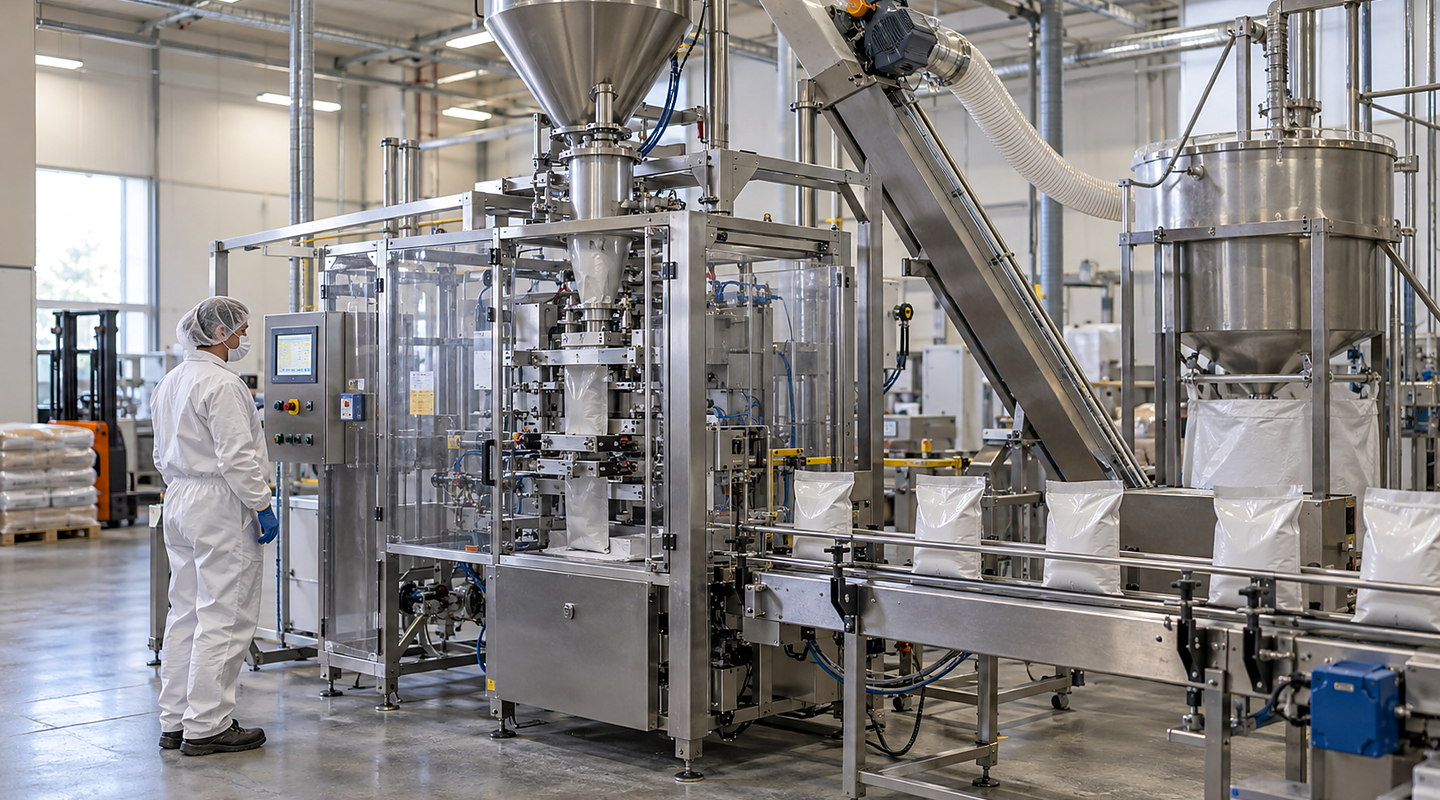
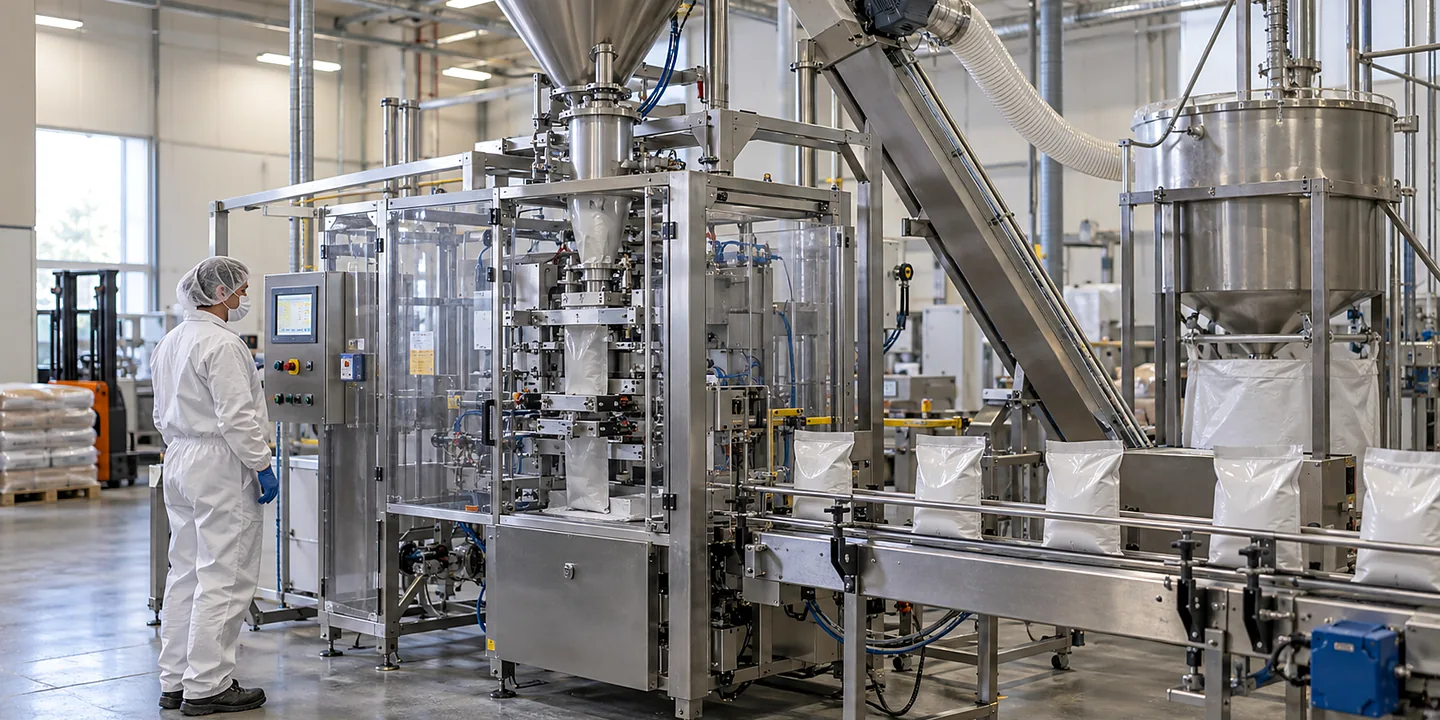
Rice packing machines combine product feeding, dosing and bag closing. Compare the full sequence for your rice variety, required pack weights and bag format. Include grain condition, dust, material replenishment and finished-bag checks before deciding the level of automation.
Speak directly with Lancing about rice weighing and bag sealing.
Quick answer
Which rice packing machine suits our bag sizes and required output?
Begin with the rice varieties and pack weights, then identify whether the bag arrives premade or is formed from roll film. For a premade bag, test opening, support and closing. For roll film, also test forming, tracking and reel changes. Count accepted closed bags over a run that includes replenishment. Record individual weights, spillage and grains caught in the seal.
Build the rice-packing brief around the finished bag
The weighing unit is only one part of the line. Bag presentation and sealing can determine usable output.
Decision 1
Which rice varieties and grain conditions are included?
Provide representative long-grain, short-grain, broken or other products actually planned for the line. Describe dust, fines and normal batch variation. Inspect the grain after transfer so a fast feed route is not accepted without considering product condition.
Decision 2
Are bags supplied ready-made or formed from film?
Provide actual premade bags or the proposed reel material and finished dimensions. Identify gussets, zips, print registration and sealing requirements where relevant. Compare the handling steps of each route rather than assuming both use the same bagging arrangement.
Decision 3
What quantity range needs to be weighed?
State every target weight, the checking method and the acceptable finished-pack result. Trial the smallest and largest quantities with the same product supply arrangement. Retain individual results so variation is visible instead of reporting only a batch average.
Decision 4
How does rice enter the open bag?
Review the discharge opening, product drop and bag support. Look for spillage, grain damage, unstable bags and dust entering the seal area. Include the handover from dosing to closing when timing the packing cycle.
Decision 5
Can the seal area remain clear?
Use the real product and film or bag construction in closing trials. Inspect contamination, trapped grains, seal appearance and the agreed integrity checks. The selected sealing conditions must be approved for the actual packaging, not borrowed from a different bag.
Decision 6
What changes during routine production?
Include rice replenishment, bag or film supply, weight changes, cleaning and finished-bag removal. State operator tasks for a semi-automatic arrangement. Compare accepted bags over a representative period rather than weighing cycles without bags.
Applications
Two useful starting points for rice packing machines
For long runs, compare accepted bags through hopper and packaging replenishment. For short orders, measure the change from the last good bag of one order to the first good bag of the next. These guides use different trial records because the production patterns differ.
Trial each important rice and pack-weight combination using production materials. Record individual quantities, grain condition, spillage, dust, seal results and operator interventions. Include a replenishment and a restart. Check that the finished bags can be handled and packed into their agreed outer format without losing the approved presentation.